
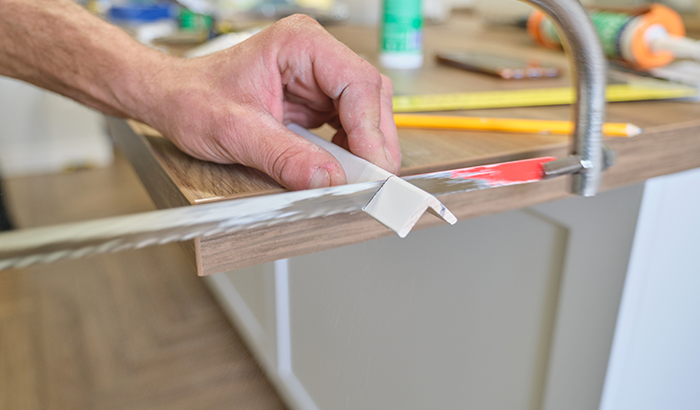
Cabinet refinishing is one of the best investments you can make in your home. When homeowners try to rush the process or skip steps to save time and money, the results are usually the opposite: peeling paint, uneven finish, wasted weekends, and the cost of doing it all over again.
Here are five cabinet refinishing shortcuts that seem like a good idea in the moment and why each one backfires.
Shortcut 1: Skipping the Sanding Step
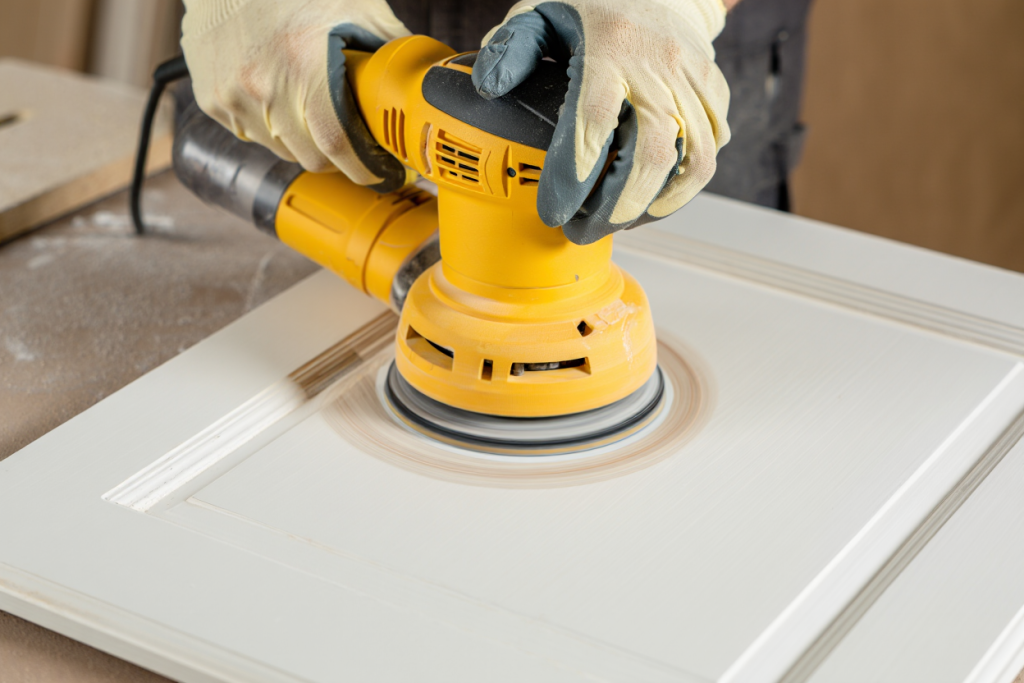
Sanding is the step most DIYers want to skip because it’s messy and time-consuming. But sanding is what creates the tooth the microscopic texture that lets primer and paint actually bond to the cabinet surface.
Skip it, and your paint will look fine for a week or two. Then it starts peeling at the edges, chipping near the handles, and lifting anywhere moisture gets in. That’s not a finish failure. That’s a prep failure.
Shortcut 2: Skipping Primer
Primer isn’t just an extra coat of paint. It’s a bonding agent that seals the wood, blocks tannin bleed (especially in oak), and gives your topcoat something to grip. A lot of DIYers either skip it entirely or use a paint-and-primer-in-one product and wonder why their finish looks chalky or uneven after a few months.
If your cabinets are bare wood, stained, or previously painted with an oil-based product, primer is not optional.
Shortcut 3: Not Cleaning the Surface Properly
Kitchen cabinets accumulate years of grease, cooking vapors, and cleaning product residue even when they look clean. Paint will not bond to a greasy surface.
A quick wipe-down with a damp cloth won’t cut it. Proper prep involves a degreaser, followed by a clean rinse, followed by time to fully dry. Skipping or rushing this step is one of the most common reasons refinished cabinets start peeling within months.
Shortcut 4: Brushing Instead of Spraying
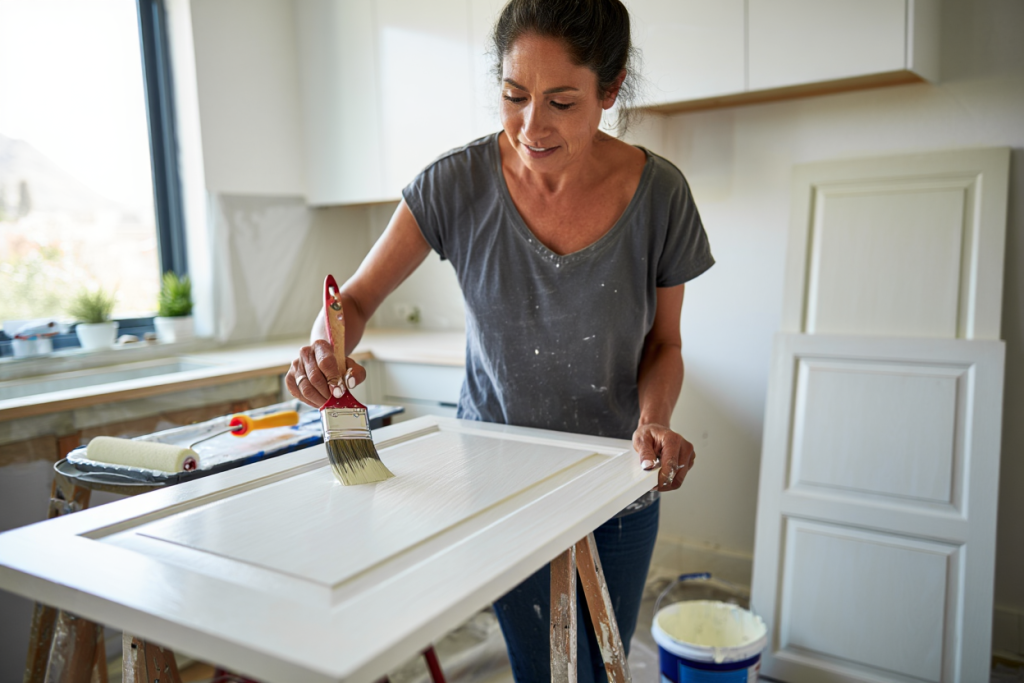
Brush marks are the telltale sign of a rushed cabinet paint job. No matter how good a brush you use or how carefully you work, brush application leaves texture. Spray application done correctly, with the doors removed and laid flat creates the smooth, factory-finish result that actually adds value to your home.
Spraying takes more setup time upfront. But it’s the only method that produces results worth keeping for 10+ years.
Shortcut 5: Rushing the Dry Time Between Coats
Applying a second coat before the first is fully cured is one of the easiest mistakes to make. It feels like you’re saving time. What actually happens is the coats don’t bond properly to each other, and you end up with a soft finish that dents, scratches, and peels far earlier than it should.
Cure time isn’t the same as dry time. The surface may feel dry to the touch in an hour. Full cure where the paint reaches its hardest, most durable state takes significantly longer, especially in humid conditions.
The Right Way Takes Time.
Here’s the full process done correctly:
- Remove all hardware, cabinet doors, and drawer fronts
- Sand all surfaces thoroughly
- Degrease and clean all surfaces, allow to dry completely
- Apply an even coat of primer
- Spray paint in thin, even coats allowing full dry time between coats
- Reinstall hardware, doors, and fronts once fully cured
Let Allen Brothers Do It Right the First Time
Allen Brothers Cabinet Painting has been refinishing cabinets across the Wasatch Front for years. We serve Sandy, Draper, South Jordan, West Jordan, Salt Lake City, and surrounding Utah communities and we complete most projects in a week or less, with results that last.
Contact us today for a free estimate. No shortcuts. No surprises.re about our process and get a free estimate. We’re excited to work with you!