
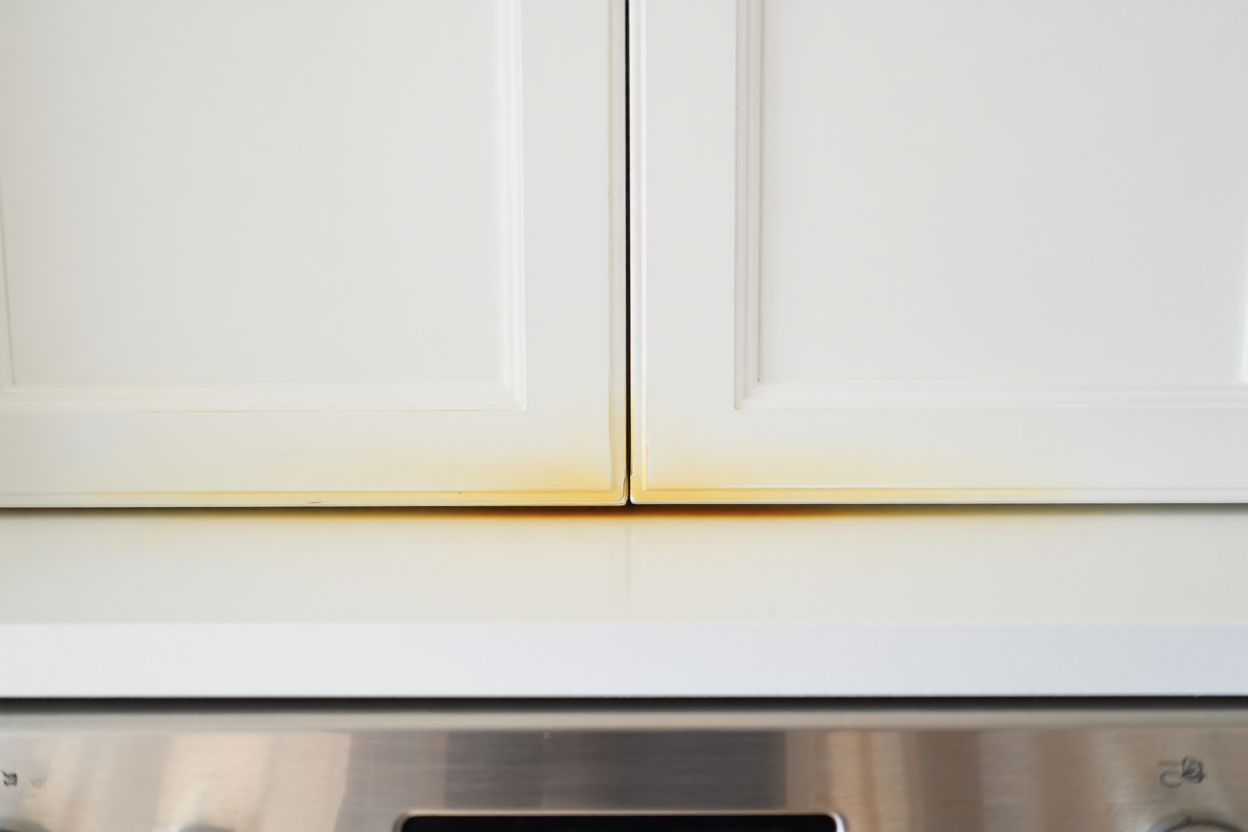
You painted your cabinets white. They looked fresh, clean, exactly what you wanted.
Then, somewhere between six months and two years later, you started noticing it: a faint warmth creeping into the finish.
White cabinets turning yellow is one of the most common complaints homeowners have after a paint job, and the cause is almost always traceable to the same handful of culprits.
The finish itself is usually where it starts
Not all cabinet paint holds a true white over time. Oil-based and alkyd-based paints contain resins that oxidize when exposed to air, and as that chemical process progresses, white shifts toward yellow or cream. It is a chemistry problem, not a cleaning problem, and no amount of wiping will undo it. This is exactly why the product you choose at the beginning matters.
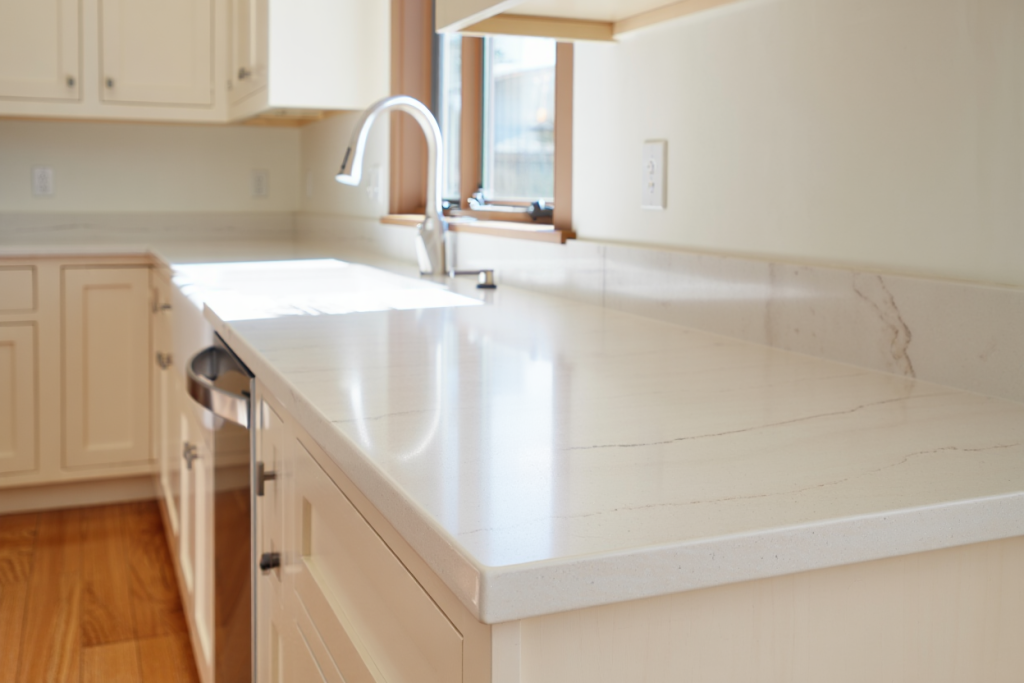
Grease and heat compound the problem
The cabinets directly above the stove collect airborne grease with every meal cooked beneath them. That film is nearly invisible at first, but it bonds to the paint surface and darkens over time. Heat accelerates the process around these areas and puts more stress on a finish than anywhere else in the kitchen.
What you clean with matters.
Mild dish soap and water is the right choice for painted cabinets. Anything stronger risks degrading the finish. Cleaners like Clorox or Lysol wipes can actually cause the paint to yellow. Ammonia-based cleaners carry the same risk. The products sitting under most kitchen sinks right now are too aggressive for a painted cabinet surface.
The 2K polyurethane difference
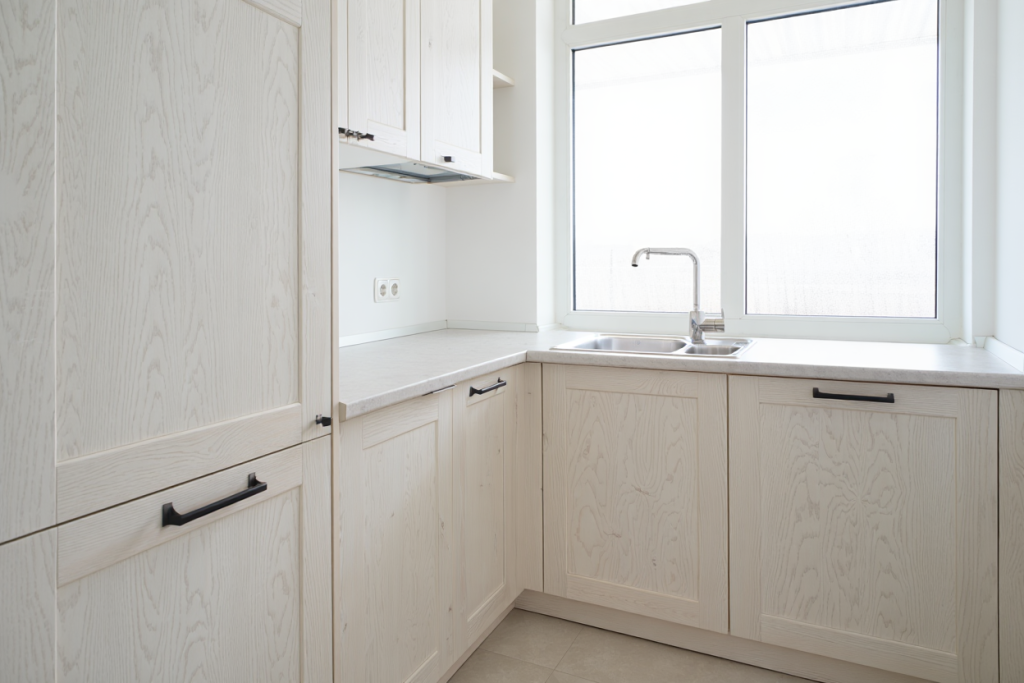
After painting over two thousand kitchens across Salt Lake, Davis, Utah, and Weber counties, Here at Allen Brothers Cabinet Painting we use Milesi 2K Polyurethane as our primary product for one central reason: it holds. The 2K formula uses the same class of technology found in high-performance industries, and its resistance to UV degradation, moisture, and color shift puts it in a different category entirely from standard cabinet paint. It does not yellow. It does not fade. And it comes with a worry-free guarantee
Benjamin Moore Satin Impervo is another solid product, one that we have used for years. It is easier for homeowners to touch up themselves and works well in many kitchens.
If your white cabinets are already turning yellow, the finish is working against you. If you are planning a paint job and want white to stay white, the product conversation needs to happen before any work begins.
Reach out to Allen Brothers Cabinet Painting for a quote, and ask about the 2K polyurethane option. Choosing the right finish from the start is the only real way to prevent this problem.
Why are my white painted cabinets turning yellow near the stove?
The area above the stove collects airborne grease with every cooking session. That grease bonds to the paint surface and darkens over time. Cabinets in that zone also receive more heat exposure than anywhere else in the kitchen, which accelerates the chemical breakdown of finishes that are not heat-resistant.
Can I reverse yellowing on painted cabinets?
Grease-based yellowing cannot be cleaned away once it bonds to the surface. Oxidation-based yellowing from certain oil-based paints can fade slightly, but it will not fully reverse. Repainting with a high-performance, non-yellowing product is the only reliable long-term fix.
How should I clean white painted cabinets to avoid yellowing?
Mild dish soap and warm water, applied with a soft cloth. Avoid Clorox, Lysol wipes, magic erasers, or anything ammonia-based. These products can chemically alter the finish and accelerate discoloration over time.
Will a clear coat protect my cabinets from yellowing?
Not necessarily, and some clear coats introduce their own yellowing risk over time. The better approach is a finish that does not require a topcoat because the paint itself provides the durability. Allen Brothers Cabinet Painting’s 2K polyurethane is applied without a clear coat for exactly this reason.