
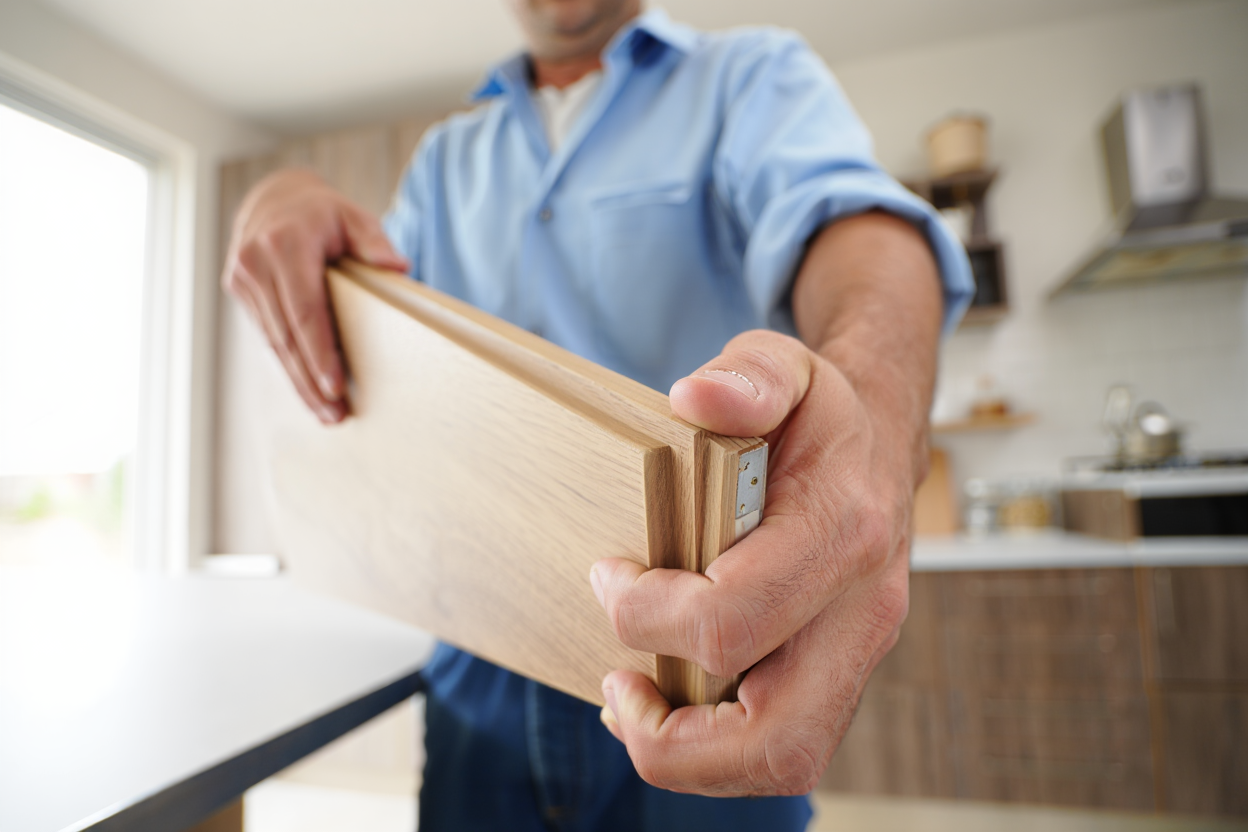
Most homeowners with outdated kitchen cabinets face the same question: refinish or replace? After refinishing over a thousand kitchens across Utah, we’ve developed a clear framework for making this decision. This guide breaks down what separates restorable cabinets from those that need replacement, based on our hands-on experience with restoring old kitchen cabinets, everything from 1960s oak to modern melamine.
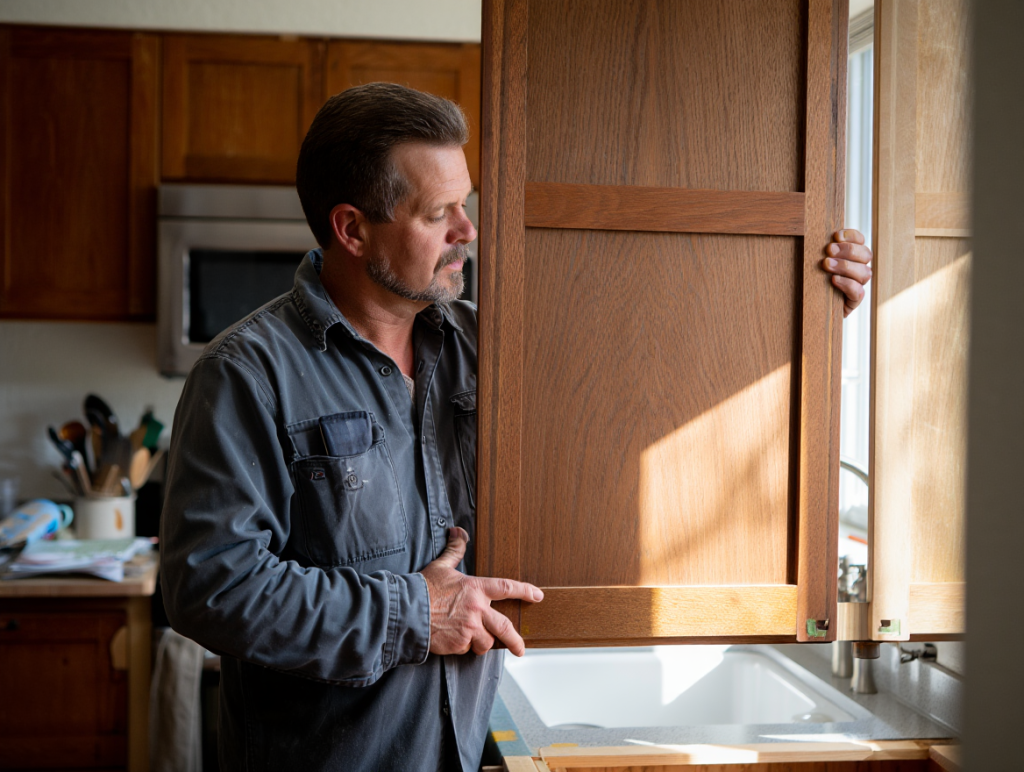
What Qualifies Cabinets as Restorable
Cabinet boxes tell the restoration story. Solid wood construction with dovetail or dowel joints holds up to refinishing. Particleboard boxes with peeling veneer do not. We examine three factors before committing to any restoration project.
First, structural integrity. Cabinet boxes must be square and firmly attached to walls. Sagging shelves indicate failing construction. Doors should hang properly on their hinges without binding or gaps. If the cabinet frame itself is compromised, refinishing just covers up deeper problems.
Second, wood condition. Surface scratches and worn finish are cosmetic issues that refinishing solves completely. Water damage that penetrates the wood substrate is different. Swollen particleboard around sink bases cannot be sanded smooth. Delaminating veneer on cabinet ends will continue failing regardless of new finish.
Third, construction quality. Face-frame cabinets from the 1970s through 1990s were typically built to last 40-50 years. The joinery is solid. The wood is real. These cabinets respond well to professional refinishing. Builder-grade cabinets from the early 2000s with paper-thin veneer over particleboard rarely justify refinishing costs.
We can bring most used cabinets to near perfection through our refinishing process. Cabinets with structural damage, extensive water penetration, or failing veneer fall outside this category.
Professional Refinishing Versus DIY Approaches
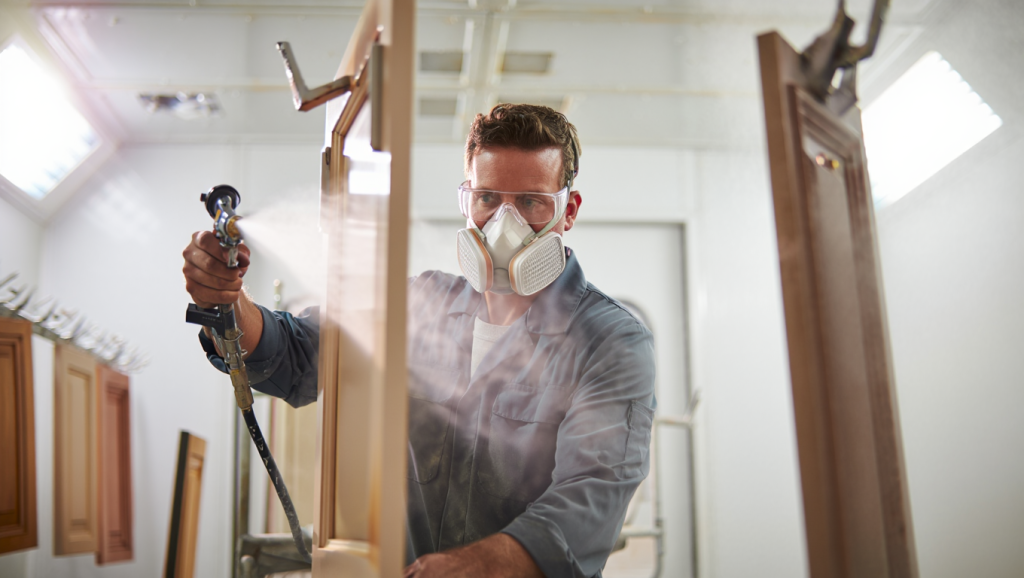
Our refinishing process uses the same technology that automotive manufacturers use for car finishes. This is not an exaggeration for marketing purposes. The Milesi 2k polyurethane we spray is the same technology to automotive clear coats.
The process involves four coats total. We sand the existing finish, apply primer, sand again, apply a second primer coat, then spray two coats of finish product. Each step serves a specific purpose in achieving factory-smooth results.
For oak cabinets, the oak grain becomes minimized but does not disappear completely. Hundreds of oak kitchen projects have demonstrated that homeowners appreciate the subtle grain texture that remains. It provides character while achieving the clean look they want.
Knotty cabinets receive similar treatment. We fill the knots, but some evidence remains. This is a limitation of the refinishing process that we communicate clearly before starting work. Customers who want absolutely zero knot visibility should consider replacement instead.
Consumer cabinet paints from Benjamin Moore, Sherwin Williams, or Home Depot last 3-5 years under daily kitchen use. These products are prone to chipping, scratching, and wearing at high-touch points like handles and drawer fronts. They can swell or degrade when exposed to moisture around sinks and dishwashers.
Our 2k polyurethane finish lasts 10+ years. The chemical resistance is significantly higher while the moisture resistance makes it ideal for kitchens and bathrooms where humidity and water exposure are constant.
Why Professional Finishing Outperforms DIY
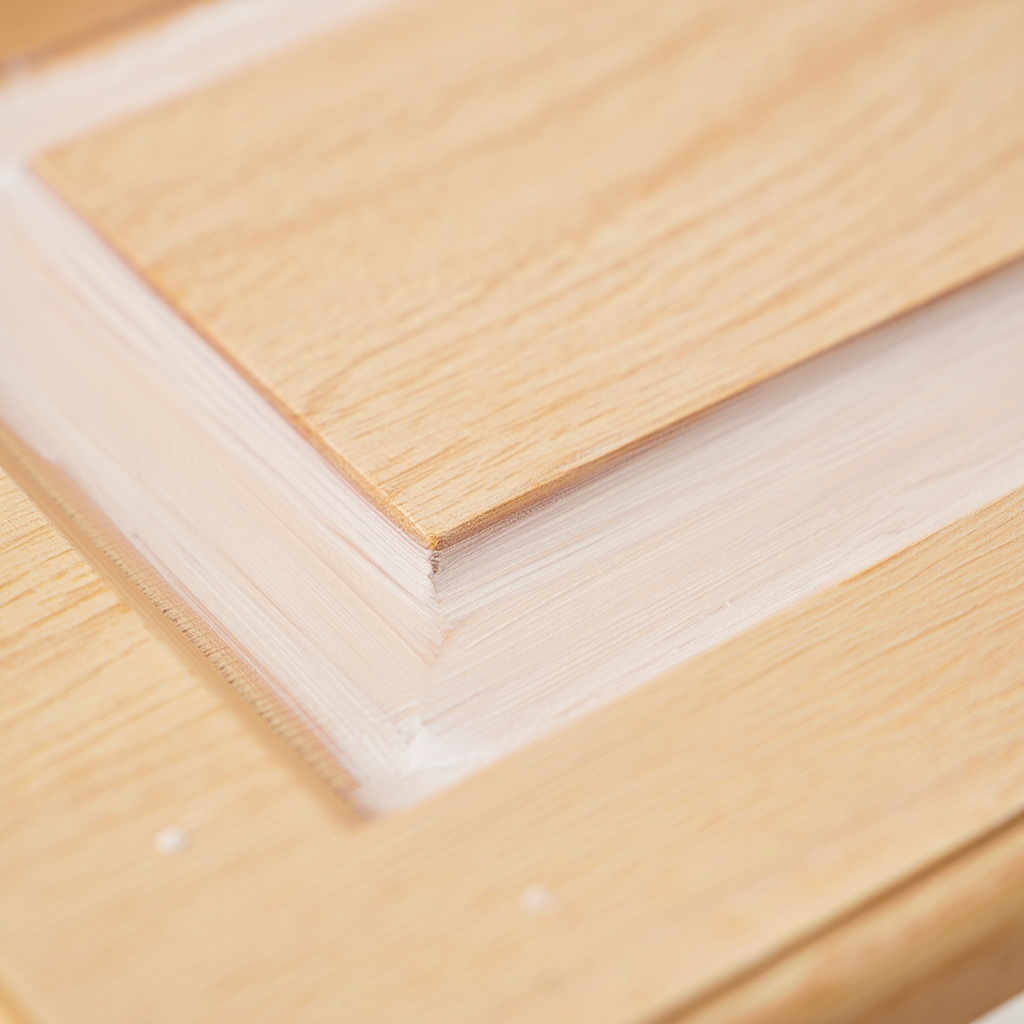
The spray equipment makes the difference. This creates the factory-smooth surface that customers describe as feeling like it came from the manufacturer.
Brush and roller application leaves texture. Even skilled painters cannot eliminate brush marks completely when using consumer-grade cabinet paint. The texture collects dirt and grease over time, particularly on cabinet faces near the stove.
We also prep more thoroughly than DIY projects allow. Every surface gets sanded before primer. We sand again between primer coats. This removes any imperfections before they get locked under the finish coats. Skipping these sanding steps results in a finish that looks acceptable initially but shows every flaw within months.
The curing process matters too. Our 2k polyurethane uses a chemical catalyst that creates cross-linked molecular bonds as it cures. Once fully hardened over several weeks, the finish cannot be dissolved by household chemicals. Consumer paints dry through evaporation, leaving a softer finish that remains vulnerable to damage.
Common Cabinet Problems and Realistic Solutions
Wood expands and contracts with humidity changes. This is not a defect in either the wood or the finish. We specifically avoid caulking joints between door panels and frames unless the gaps are exceptionally bad. Caulked joints look perfect initially but crack within 6-12 months as the wood moves. We have learned from thousands of projects that minimal caulk prevents long-term problems.
This means refinished cabinets will show slight movement in joints over time. This is normal wood behavior, not a paint failure. Customers who expect absolutely perfect, crack-free joints should understand this limitation before choosing refinishing over replacement.
Melamine cabinet interiors present specific challenges. We only recommend painting interiors for very old and worn cabinets. Most people have light-colored melamine shelving that is more durable than any painted surface would be. Painted shelving can darken over time from friction and reduced air circulation. We typically recommend leaving interiors unpainted unless they are genuinely deteriorated..
Refinishing Provides Better ROI Than Replacement
A full cabinet replacement for an average kitchen costs $15,000-$30,000 when you factor in installation, countertop removal and replacement, and temporary kitchen displacement. The project takes 6-8 weeks minimum.
Professional cabinet refinishing costs $4,800-$8,000 for most kitchens depending on size and finish choice. The project takes one week. You lose kitchen access for 3.5 days, not two months.
Our premium 2k polyurethane finish with lifetime worry-free guarantee costs $6,250 for a typical 24-piece kitchen. The Benjamin Moore option with one-year warranty starts at $4,800. Both options deliver a brand-new appearance for roughly one-third the cost of replacement.
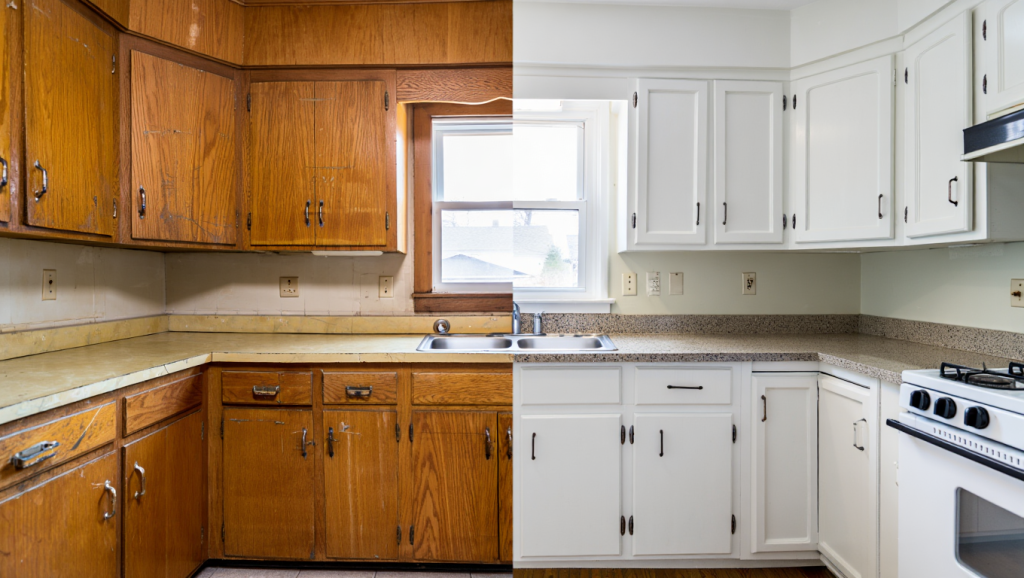
The ROI calculation is straightforward. If your cabinet boxes are structurally sound but cosmetically dated, refinishing provides the same visual transformation as replacement at 25-30% of the cost. You can allocate the saved $15,000-$20,000 toward other kitchen improvements like countertops, backsplash, or appliances.
When Replacement Makes More Sense Than Refinishing
Certain cabinet problems cannot be fixed with paint. Water damage that has swollen particleboard around sink bases creates permanent deformities. Sanding helps, but swollen particleboard never returns to its original density. These sections need replacement.
Failing cabinet box construction eliminates refinishing as an option. If boxes have separated from face frames, if corner joints have failed, or if shelves sag significantly, the structural problems will persist regardless of finish quality. We cannot refinish structural failure.
Cabinet boxes built entirely from particleboard with thin veneer are marginal candidates for refinishing. The veneer may be too thin to withstand sanding. If the veneer is already lifting or bubbling, refinishing will not reattach it. These cabinets typically need replacement.
Very old cabinets from the 1950s-1980s occupy a gray area. If they are solid wood construction, refinishing works perfectly. If they are early particleboard or compressed wood products, the substrate may not be stable enough for long-term finish adhesion.
We also recommend replacement when the cabinet layout itself is problematic. If you need different cabinet sizes, different door styles, or a complete layout change, refinishing your existing cabinets will not accomplish these goals. Refinishing changes color and finish quality, not physical configuration.
Maintenance Requirements for Refinished Kitchen Cabinets
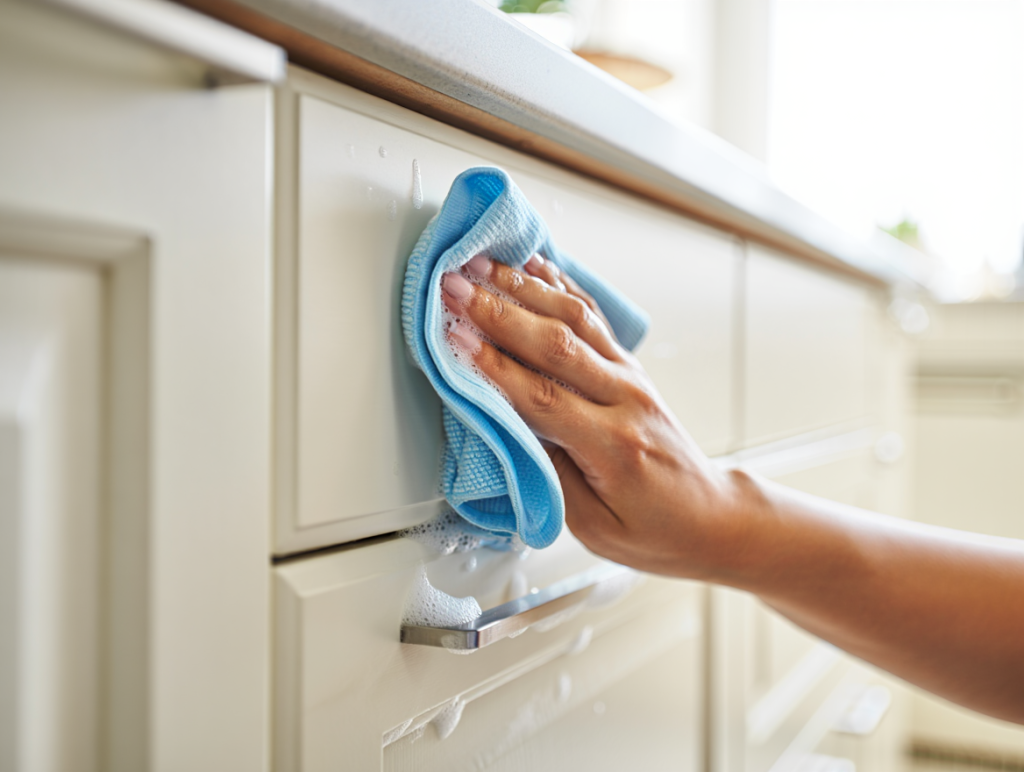
Cleaning protocol determines longevity. We recommend mild liquid dish soap and water only. Harsh chemicals like Clorox wipes or Lysol sprays cause the paint to yellow over time.
The prohibition on harsh chemicals surprises some customers. Modern polyurethane is highly chemical resistant compared to consumer paints, but it is not impervious to everything. Bleach-based cleaners and strong solvents will slowly degrade even professional finishes.
Stains and spills wipe off effortlessly with soap and water if addressed promptly. Dried grease requires slightly more effort but still comes off without damaging the finish. The 2k polyurethane is particularly resistant to staining compared to other finish options.
Touch-ups will eventually be necessary. Our 2k polyurethane requires professional touch-up because of the catalyzed chemistry. The Benjamin Moore product allows customer touch-ups with a small painter’s brush. We provide touch-up paint and instructions for any necessary maintenance.
Small touch-ups should use the smallest brush possible. Large touched-up areas become visible because the texture differs slightly from sprayed finish. Keeping touch-ups minimal maintains the factory appearance.
Paint takes weeks to reach full hardness despite drying to the touch within hours. Customers need to treat newly painted cabinets gently for the first month. The finish will continue curing and hardening over this period.
Honest Limitations of Cabinet Refinishing
Refinishing transforms appearance but does not change underlying materials. Oak grain gets minimized but remains visible. Knots get filled but some evidence persists. Cabinet door styles stay exactly the same. Paint changes color and surface quality, not physical form.
We cannot refinish cabinet boxes to different sizes or configurations. The existing layout remains unchanged. If your kitchen needs different storage solutions, refinishing will not address those needs.
Glass door fronts require extra care and cost an additional amount per door. The glass must be removed before refinishing or carefully masked if removal is not possible.
We do not offer hole drilling services for new cabinet hardware. We can install new hardware if it uses the same hole pattern as existing hardware. We can fill old hardware holes, but some evidence of the old holes may remain. Customers wanting completely different hardware hole patterns should drill new holes before we paint, or hire a carpenter for this work.
The Decision Framework: Refinish or Replace
Start by assessing structural condition. Open every cabinet door and drawer. Check for sagging, binding, or gaps. Examine corners for separation or joint failure. Feel for water damage around sinks and dishwashers. This inspection determines if refinishing is even possible.
Next, evaluate construction quality. Solid wood face frames with dovetail drawer boxes indicate quality worth preserving. Particleboard boxes with stapled joints suggest builder-grade construction that may not justify refinishing investment.
Consider your goals for the space. If you want the same layout with updated appearance, refinishing works perfectly. If you need different cabinet sizes, styles, or configurations, replacement is the only option.
Factor in timeline and disruption. Restoring old kitchen cabinets takes one week with 3.5 days of kitchen downtime. Replacement takes 6-8 weeks minimum with extended periods of no kitchen access. If timeline matters, refinishing wins significantly.
Calculate total project costs. Professional refinishing typically costs 25-30% of replacement cost for the same visual result. If budget is a primary concern and your cabinets are structurally sound, refinishing provides substantial value.
Finally, understand finish expectations. Modern 2k polyurethane provides exceptional durability, but it is still paint over wood. The wood substrate will continue behaving like wood. Customers wanting absolutely maintenance-free surfaces with zero possibility of joint cracks should consider engineered replacement cabinets instead.
Cabinet restoration makes sense when boxes are structurally sound but cosmetically outdated. Our 4-coat process using automotive-grade 2k polyurethane delivers factory-smooth results that last 10+ years under daily kitchen use. Oak grain gets minimized, knots get filled, and worn finishes get completely replaced with durable modern coatings.
The limitations are real and worth understanding. Wood continues behaving like wood regardless of finish quality. Some grain and knot evidence remains visible. Joints may develop hairline cracks from seasonal movement. These are characteristics of painted wood cabinets, not defects in the refinishing process.
For most homeowners with quality cabinet boxes that simply look dated, professional refinishing provides the same visual transformation as replacement at 25-30% of the cost. The project takes one week instead of two months. The disruption is measured in days instead of weeks.
Replacement makes sense when cabinet boxes are failing structurally, when water damage has compromised the substrate, or when you need different sizes and configurations. Paint cannot fix structural problems or change physical layout.
The decision ultimately depends on your specific cabinets and goals. We have successfully refinished thousands of kitchens across Utah, from 1960s oak to modern painted cabinets needing color updates. If you are uncertain whether your cabinets qualify for refinishing, we offer free consultations to assess condition and provide honest recommendations.
Get a Free Quote
"*" indicates required fields