
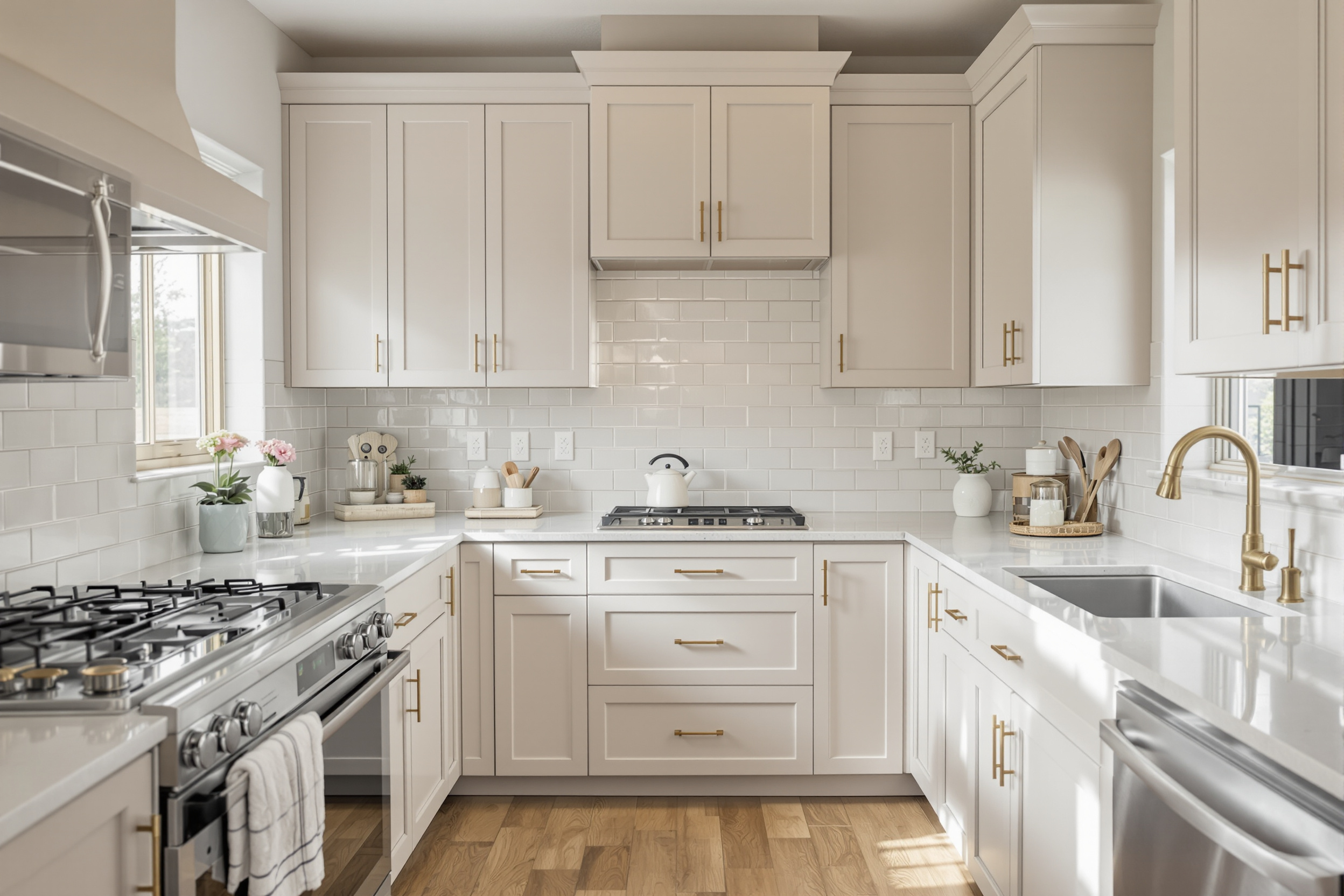
Cabinet repair covers a surprising range of problems, from a hinge that won’t stay shut to a drawer front cracked clean through.
Most of what gets called cabinet repair turns out to be a hardware swap or a bit of wood filler, both handled automatically during a professional repaint. A cracked box or a rotted frame is a different job, calling for more than a fresh coat of paint.
1. Peeling, Fading, or Scratched Finish
A worn-out finish is the easiest call. If the wood underneath is still solid, the surface has simply reached the end of its life, and a full repaint resolves it completely. This is where a basic cabinet restoration guide can help a homeowner gauge whether the wood is still serviceable enough for refinishing, though a professional bid confirms it either way. Scratches, sun fading near a window, and grease buildup near the stove all fall into this category, and none of them require anything beyond the standard process.
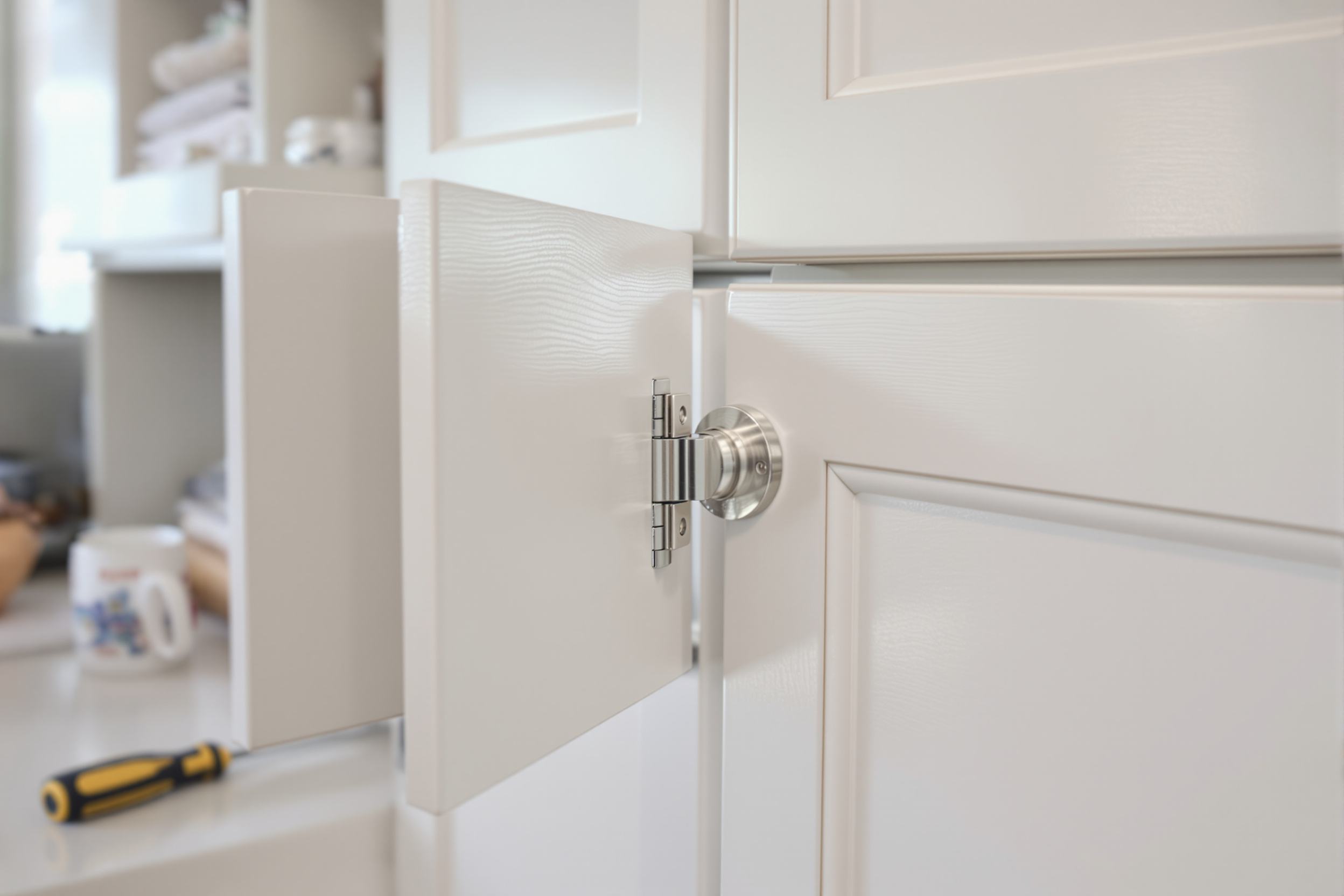
2. Loose Hinges and Worn Hardware
Doors that sag or won’t sit flush usually point to worn hinges. Allen Brothers Cabinet Painting checks hardware condition during every prep phase, and hardware installation is available at that same time if the new pieces match the existing hole pattern. Different hole patterns add a small cost for hole filling, but the fix still happens inside a normal repaint. As a homeowner if your searching for a separate cabinet repair job for a sagging door, you might end up paying twice for something a repaint already covers.
3. Small Dents, Filled Holes, and Minor Wood Damage
Nail holes, small dents, and shallow scratches get filled and sanded smooth as part of the standard four-coat process: sand, prime, sand, prime, then two finish coats. Our prep work is exactly what makes a repaint hold up, and it quietly resolves a long list of small issues a homeowner might have assumed needed a separate cabinet repair call first. Old cabinet hardware that leaves behind extra holes falls into this same bucket, since those get filled during the same pass.
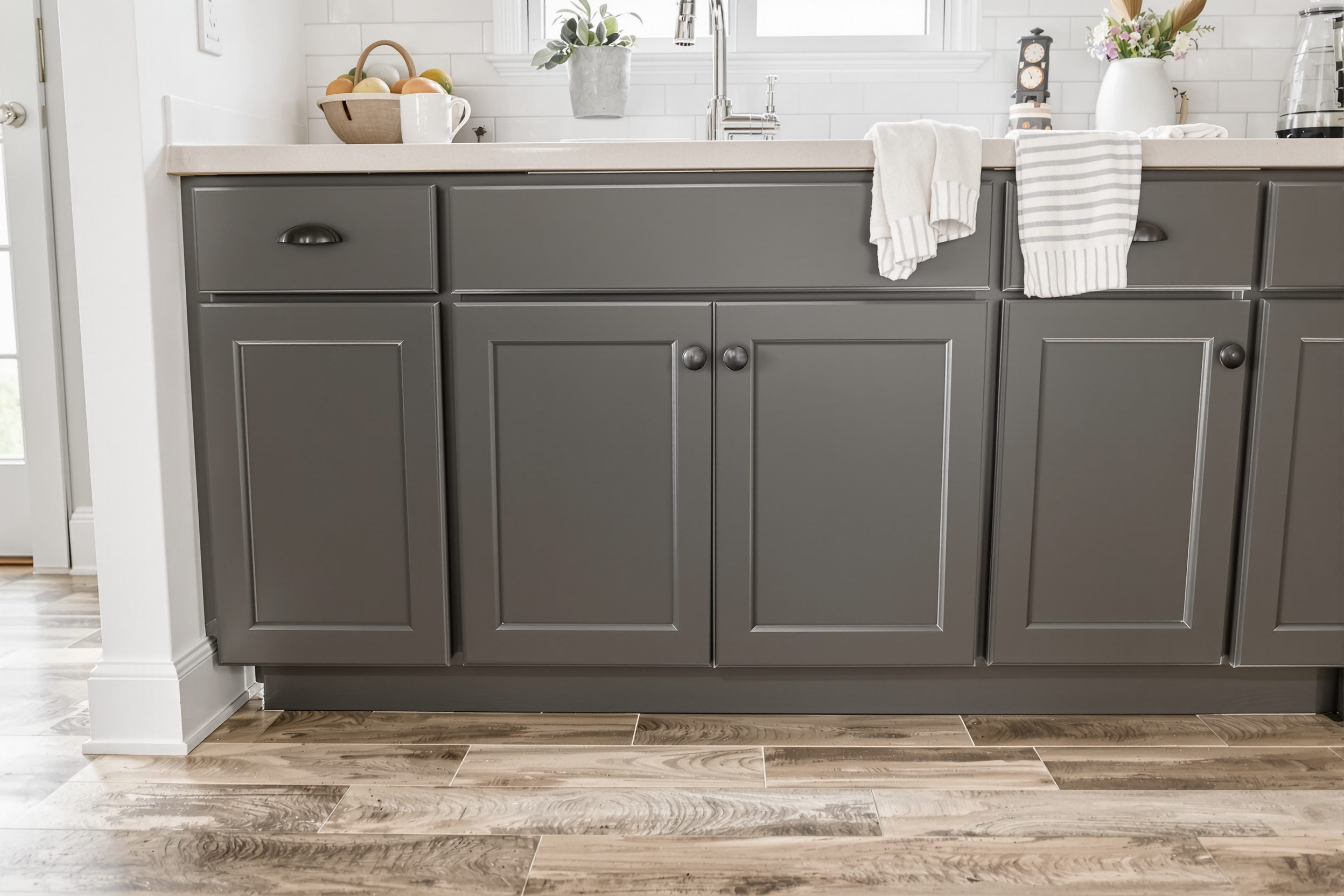
4. Cracked Boxes, Rotted Frames, or Water-Warped Wood
A cabinet box that’s cracked, warped from water exposure, or structurally unsound needs an actual repair or a replacement before paint goes anywhere near it. Paint refreshes the surface. A frame that’s already failing underneath needs its own fix first, or a fresh finish just buys a few months before the problem shows through again. A quick way to check: press firmly on the cabinet floor and around the sink base. Give or sponginess there usually means water has already reached the wood.
Getting your Bid
A bid is the fastest way to know which category your kitchen falls into, and it’s honored for six months once it’s issued. At Allen Brothers Cabinet Painting, we typically book three to four weeks out, so getting that bid early leaves room to schedule around whatever the kitchen actually needs.
The cabinet painting and refinishing process covers everything from hardware to finish, and the painting cost calculator is a useful starting point before requesting one. For cabinets that turn out to be structurally beyond saving, the paint or replace guide covers that decision directly. A $100 deposit reserves a spot on the schedule once the bid comes back.
Frequently Asked Questions
How do I know if cabinet damage is structural?
Cracked boxes, rotted frames, and water-warped wood are structural. Peeling finish, scratches, and loose hardware are cosmetic and resolve with a repaint.
Is a bid the same as a repair estimate?
No. A bid is a fixed price based on the actual cabinets, and it’s honored for six months once issued.
How long does a typical cabinet painting project take?
About one week total. Doors are picked up the Tuesday before the start week for off-site finishing, and in-home work runs roughly three and a half days.